

Falta de todos los dientes superiores o inferiores
Qué pasa si me ’ m faltan todos los dientes inferiores?
A pesar de que muchos pacientes no tienen ningún problema usando una dentadura superior, some people find it difficult to wear and eat with lower dentures. Varios las opciones de sustitución por implantes están disponibles si se echa en falta todos los dientes inferiores.
Prótesis de bola conexión
Una opción es tener dos implantes colocados en la mandíbula inferior y una dentadura hecho que encaja en estos implantes. This option allows your lower denture to be more stable while chewing than without implants. Sin embargo, there will still be movement of your lower denture, y se producirán puntos de dolor si las partículas de comida, especially seeds, are caught under it. As with all removable replacement teeth, you still will need periodic appointments for denture adjustment.
Dentadura postiza del accesorio de barra
Another option involves placing four to six implants, depending on your jaw size or shape, into your lower jaw. After healing is complete, the implants are connected with a custom-made support bar. Your denture will be made with special internal retention clips that attach onto the support bar, enabling the denture to snap firmly into place. Esto se llama una "sobredentadura". La ventaja de esta opción es que es mucho más estable que la primera opción y permite muy poco movimiento de la prótesis. Your denture is still removable for easy cleaning and maintenance.
Tornillo de retención de la dentadura
Una tercera opción consiste en colocar cinco o más implantes en la mandíbula y adjuntando una dentadura permanente. Su prótesis se mantiene en su lugar por medio de tornillos o ganchos que sujetan a los postes de soporte o barra. It doesn’t touch the gum tissue, que le permite limpiar debajo de la dentadura sin sacarlo. Esta prótesis reemplazará todos sus dientes inferiores que faltan y no será eliminado, excepto en las visitas de mantenimiento. Although cleaning under your denture without removing it is more time consuming and requires more dexterity, muchos pacientes que desean una dentadura permanente prefieren esta opción.
Los implantes individuales
The final option is to have all your teeth individually replaced so that they will appear to be growing out of your gum tissue and will most closely resemble the appearance of your natural teeth. Esta opción requiere generalmente ocho o más implantes. Separate abutments or support posts for each one of these implants will be made and crowns for each missing tooth will be placed. The teeth are often joined together for sinus grafting to replace bone height strength and support. Overall, this is the most costly option, because it requires the most implants and individual replacement tooth fabrication. Sus opciones de reemplazo también pueden estar limitadas por el tamaño y la forma actual de la mandíbula.
¿Qué pasa si me faltan todos los dientes superiores?
A similar range of treatment options is also available for your upper jaw. Sin embargo, because the bone is not as hard as that in the lower jaw, people often need more implants to support their new replacement teeth.
Implant Retained Upper Denture
Depending upon the number of implants to be placed, it may be possible to eliminate the need for covering the roof of your mouth with a complete denture. This option allows you to fully taste your food and gives you a better sense of its temperature. Your denture will feel more natural. You will still have a removable denture, which makes cleaning the support bar and denture much easier.
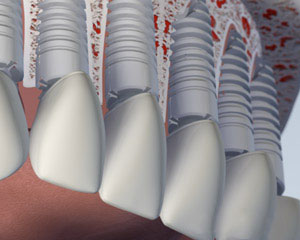
Individual Upper Implants
If you want a restoration that is similar to your natural teeth and therefore not removable, es probable que necesite ocho a diez individuo implantes placed. Esto es seguido después de sanar por la colocación de los pilares y las nuevas coronas de reemplazo.


